
Future Thinking
Lessons From 90-Something Friends


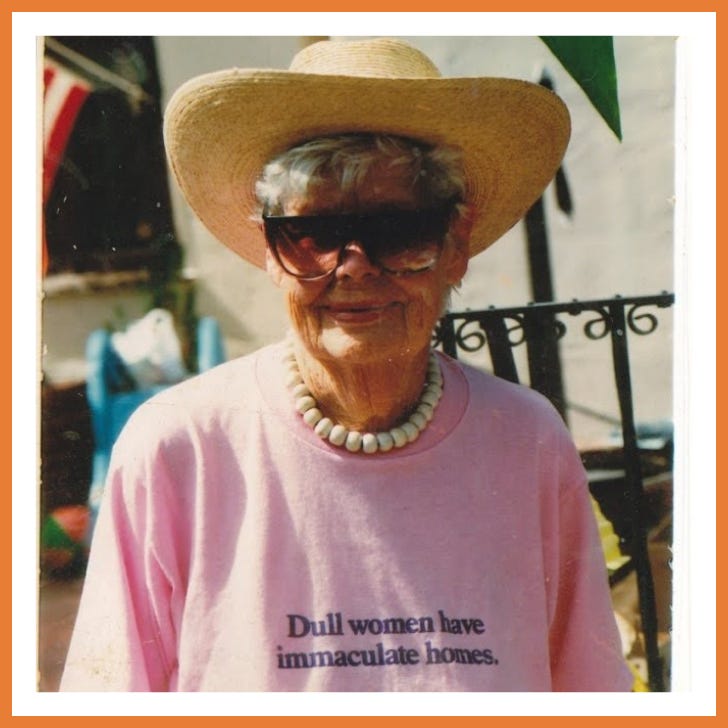
My thinking about older age began decades ago, when I studied architecture in Berkeley and rented an in-law apartment from Jean, who was in her mid-70s. It was the first time I had made friends with someone that much older than me.
In Austria, where I grew up, there was a hierarchy between young and old—we respected older people, but frankly, we were a little scared of them and kept them at a distance. But I was encouraged to dismantle that cultural barrier when I moved into Jean’s house.
She lived without self-judgment, acknowledged challenges frankly, and was endlessly curious. Her example set me on the path to my current work: helping older adults live optimally in their homes on their own terms. This approach starts with continuing to value who you are despite increasing frailties and cognitive changes. Not easy, as it turns out—for oneself, one’s family, and one’s friends.
In 2025, decades after Jean, this lesson started to hit home. At 68, I’m noticing changes in myself. Sometimes I have to defend that I’m still doing certain things but some things actually have changed. What happened to easy, carefree entertaining, for instance? I used to invite people for dinner or throw a party without much forethought, but now, it feels like work; it takes more effort. I can’t just start cooking an hour before guests arrive like I used to—cramming it all in is now more tiring than fun.
I’m also shocked to learn my blood sugar is too high and my cholesterol’s above normal. What did I do wrong? I’m slim, run 15 miles a week, eat healthy, and am more engaged than ever in my work. I’m used to not having to pay attention to a well-functioning body. Now, I have to. It bothers me that I can’t “fix” these health concerns with willpower. And I know I’m not alone in feeling like this. It’s what most people fear about getting old—a failing body and loss of control.
I’m also aware that this is just the beginning, and so I look to older friends and participants in the Aging 360 workshop our nonprofit offers to see how they navigate such changes in body and mind.
Recently, I had dinner with a friend, who turned 90 last year. She’s had two hip replacements, several falls, and lives with chronic back pain. So, walking now requires two canes, which makes going out complicated.
She has a caregiver at night, mostly because she can’t get out of bed on her own to use the bathroom. But she found a remote-control bed that converts into a chair that she can get out of by herself. She proudly demonstrates it, practicing the mechanics, perfecting her technique, getting up and sitting down from this mattress-turned-chair. Fortunately, she has the financial means for these tools and the help she needs; but more than that, it’s her attitude that impresses me. She doesn’t see these adjustments as signs of decline. Her approach is practical and outcome-oriented—a means to continue her work, publishing her autobiography and remaining in her longtime home and garden.
The other major adjustment older adults often face is learning to live alone after losing a life partner. For another friend, who also turned 90 last year, the death of her husband of more than 70 years proved pivotal. After years serving as his primary caregiver, she now relies on caregivers 24/7, walks with a walker, and has fallen and broken bones several times. Her cognition is shifting, meaning she’s living more and more in the past while constantly being reminded of her present reality and physical frailties. In her assisted living residence, late breakfast and dinner provide her main social contact, which now is more crucial than ever. Her dog cuddles and makes her laugh. Yet something else sustains her through this diminished autonomy: her sense of self, which is rooted in family and a close-knit circle of friends she’s nurtured over decades. She’s grateful for the care she receives; she knows it allows her to retain some control. And when she feels well enough, it’s her curiosity that enables her to think toward the future.
The takeaways for me? First, I’ll borrow a phrase my friend used when talking about the launch party for her biography set for the spring of 2026: “Before I leave this earth.” It’s a fitting way to think about the future in older age. It refers to a departure rather than an end, which implies possibility and purpose. Second, I’m strengthened in my resolve to continue nurturing friendships and relationships, to not let the old ones slip away even when those friends don’t make the effort. It means investing in them and acknowledging this may take more and more energy. Third, I vow to continue to feed my curiosity, to stay open to new encounters, those young and old, to do my best not to block them through judgment, and to focus on the future, trusting it holds adventures yet unknown.
With gratitude to all my mentors. I wish you all a safe and sound new year and the moxie to navigate the ‘trip hazards’ of older age.
Another beautifully crafted, thoughtful article, Susie. It illustrates how embracing age with acceptance and grace can remove some of the angst we create over this natural process we can't avoid. Facing it with "hope and discovery" rather than viewing as an end, totally changes the experience. Thanks for this reminder.
Beautiful, Susi!